
What Is Bimaxillary Protrusion? How We Assess Your Profile and Treatment Options
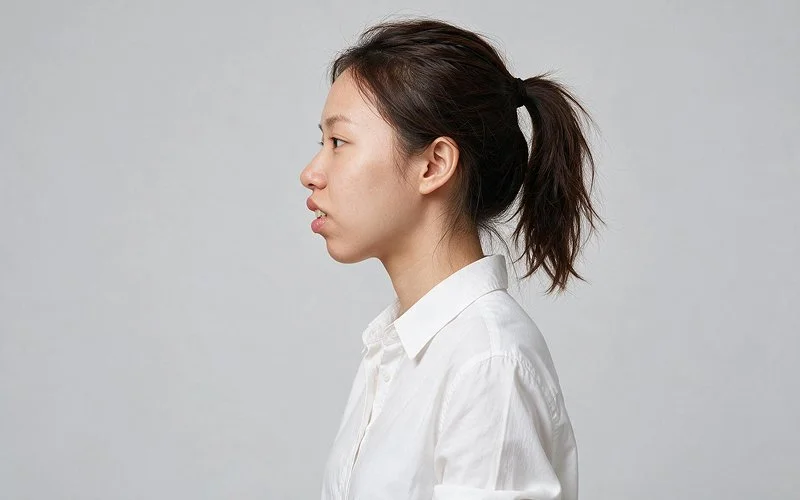
Have you noticed that your lips appear more prominent, or that your front teeth seem to project forward even when your bite feels otherwise balanced? One possible explanation is bimaxillary protrusion, where both the upper and lower teeth or jaw structures are positioned further forward than usual. Beyond appearance, this may influence how the lips rest and, in some cases, how comfortably the mouth closes.
In this article, we walk you through what bimaxillary protrusion is, what may contribute to it, and what options you may consider.
Key Takeaways
Bimaxillary protrusion describes the forward position of both the upper and lower front teeth or their supporting structures, which may make the lips appear more prominent.
It is not always a condition that requires treatment. For many people, it is simply a natural variation in facial structure and may only need monitoring.
A proper assessment looks beyond the teeth to evaluate your bite, jaw structure, facial profile, and treatment goals before recommending any treatment.
Treatment is tailored to the individual and may involve braces, clear aligners, extractions, Temporary Anchorage Devices (TADs), or, in selected cases, jaw surgery.
The most suitable treatment approach depends on the underlying cause of the protrusion, not just how your profile looks.
What Is Bimaxillary Protrusion?
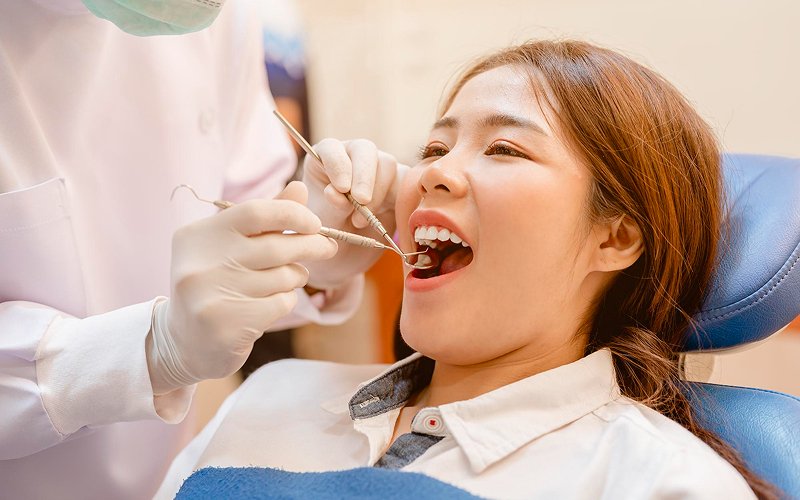
Bimaxillary protrusion is typically identified by the forward positioning of both the upper and lower front teeth. This is also known as dentoalveolar flaring, where the front teeth tilt outward rather than sitting upright within the jaw. In many cases, the protrusion involves not only the teeth themselves but also the alveolar bone, which is the part of the jawbone that supports and houses the teeth.
However, bimaxillary protrusion does not correspond to just one type of bite. While it is commonly seen in people with a Class II bite, where the lower jaw sits slightly further back than the upper jaw, it can also occur in those with Class I or Class III bite relationships. For this reason, we will need to assess your teeth, jaws, and facial profile together before determining whether bimaxillary protrusion is present.
Potential Causes of Protruding Teeth
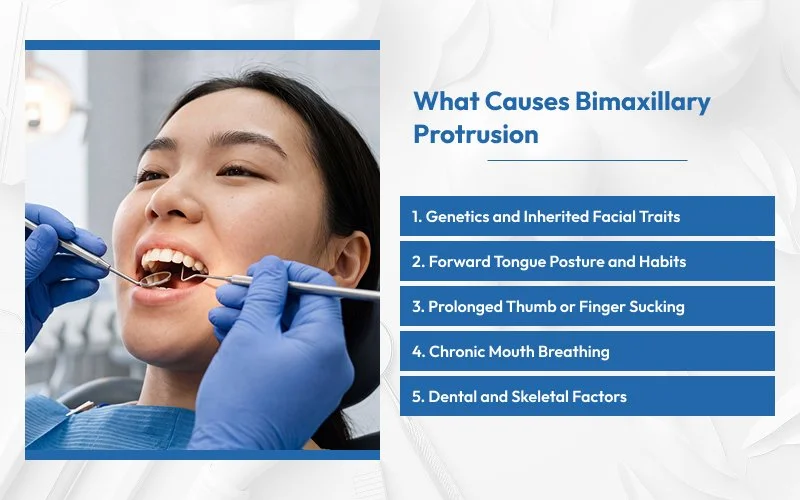
1. Genetics and Inherited Facial Traits
Bimaxillary protrusion is reported more frequently in Asian and African populations and may simply reflect a person’s inherited facial structure. In these cases, flared front teeth or more prominent lips are not necessarily signs of a dental issue.
2. Forward Tongue Posture and Habits
The teeth sit within a balance of pressure from the tongue on the inside and the lips and cheeks on the outside. A forward tongue posture or repeated pressure against the incisors may contribute to outward tooth movement over time. Habits such as repeatedly biting or trapping the lower lip behind the upper teeth may also place pressure on the upper front teeth.
3. Prolonged Thumb or Finger Sucking
Thumb or finger sucking places repeated pressure behind the upper front teeth and against the lower teeth. When the habit continues as permanent teeth erupt, it may cause the upper incisors to tilt forwards, the lower incisors to tip backwards, or an open bite to develop.
4. Chronic Mouth Breathing
Persistent mouth breathing often leaves the lips apart and the tongue resting lower in the mouth. This changes the usual muscle pressure around the teeth and may contribute to a narrower upper arch or altered tooth position during growth. Children who regularly breathe through their mouth should be assessed for possible causes such as nasal blockage, allergies, or enlarged tonsils.
5. Dental and Skeletal Factors
Crowding may force the front teeth to sit further forwards to create enough space within the dental arch, even when they look relatively straight. The position of the supporting bone, jaws, and chin can also affect how prominent the teeth and lips appear from the side. For example, a less projected chin may make the lips look fuller even when the teeth are only moderately tilted.
Is Bimaxillary Protrusion Always a Cause for Concern?
Not always. For some people, bimaxillary protrusion is simply a natural facial and dental variation that causes no discomfort or functional problems.
If your teeth are healthy, your bite feels comfortable, and your lips close naturally, our orthodontists may recommend monitoring the condition rather than starting treatment. This is especially common in younger patients, as jaw growth and permanent tooth eruption may still affect the development of their teeth and facial profile.
However, our dentists may recommend correction or treatment if:
You find it difficult to close your lips comfortably at rest.
You experience strain around the chin when bringing your lips together.
Crowding, an open bite, a deep bite, or another bite concern is present.
The position of your teeth makes cleaning more difficult.
You are concerned about the aesthetic appearance of your teeth, lips, or side profile.
An orthodontic assessment can help determine whether these concerns are related to bimaxillary protrusion and what treatment options are more appropriate for your age and stage of dental development.
How is Bimaxillary Protrusion Diagnosed?
Diagnosing bimaxillary protrusion requires more than looking at whether the incisors appear slanted. Dentists will typically ask about your symptoms, concerns, and treatment goals.
1. Teeth, Bite, and Jaw Assessment
The orthodontist examines your:
Tooth alignment, spacing, and crowding
How the upper and lower teeth meet
The angle of the front teeth
Gum and supporting tissue health
Jaw position and movement
Existing dental work or missing teeth
This helps us determine whether the protrusion comes mainly from the teeth, supporting bone, jaw structure, or a combination of these factors.
2. Facial Profile and Lip Assessment
We look at how the lips, nose, chin, teeth, and jaws relate to one another. This may include checking whether the lips close comfortably, whether the chin muscles strain during closure, and how much of the teeth and gums show when you smile.
Chin position is also important, as a less projected chin can make the lips appear more prominent.
3. Digital Records and Imaging
Diagnostic records may include photographs, an intraoral scan, and appropriate X-rays. These help us assess tooth position, jaw relationships, root position, and the surrounding bone.
At Align Braces Clinic, we may also use the iTero intraoral scanner to create a three-dimensional model of your teeth. Digital simulations can help explain possible tooth movements, although they cannot guarantee an exact final result.
How is Bimaxillary Protrusion Treated?
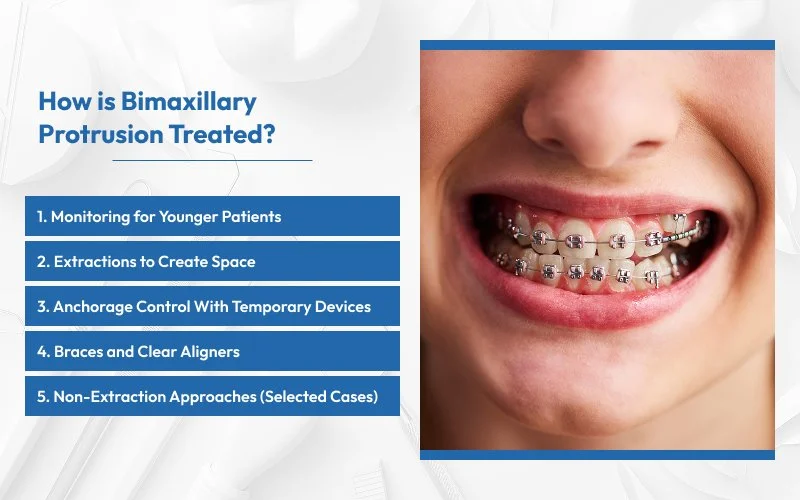
There is no standard orthodontic treatment plan for bimaxillary protrusion. Our orthodontists consider factors such as the degree of prominence, available space, crowding, bite, gum and bone health, and growth stage.
In younger patients, we may first monitor jaw growth, tooth eruption, and oral habits before planning full treatment. The options below are more commonly considered for older teenagers and adults, once most permanent teeth have erupted and the dental pattern is clearer.
1. Extractions to Create Space
If your front teeth need to move back by a greater amount, your orthodontist may recommend removing selected teeth, usually the first premolars. The space created allows the front teeth to be repositioned more upright without pushing them beyond the limits of the supporting bone.
We understand that patients are often concerned about removing healthy teeth. However, this is only considered after assessing your crowding, bite, facial profile, gum health, and the amount of movement required. The extraction spaces are gradually closed during treatment and are not intended to remain visible.
2. Anchorage Control With Temporary Devices
To support controlled tooth movement, orthodontists may use temporary anchorage devices (TADs), also known as miniscrews. These are placed into the jawbone to provide a stable point from which the teeth can be moved. They may be used when the front teeth need to move backwards without allowing the back teeth to shift forwards into the available space.
TADS are usually small, temporary, and placed in areas that are not noticeable when you smile. Your orthodontist will explain how they are inserted, how to keep the area clean, and when they can be removed.
3. Braces and Clear Aligners
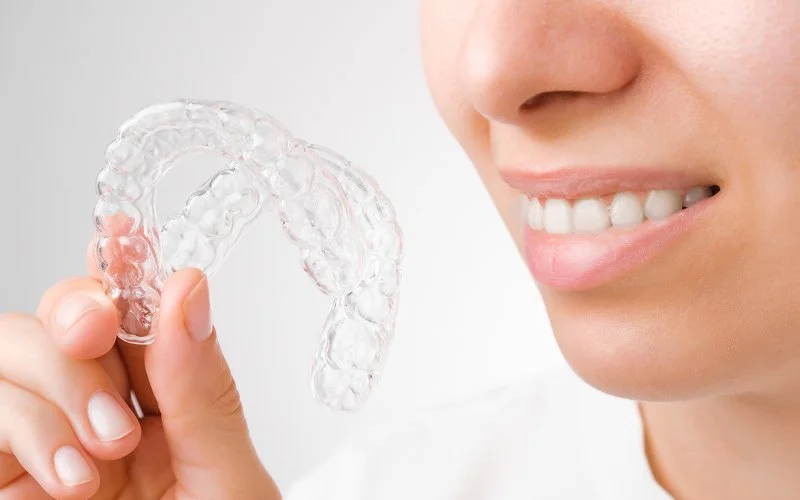
Both braces and clear aligners may be used, but the more suitable option depends on how much movement is needed and how complex the bite is.
Fixed braces, such as metal braces, may provide more direct control when closing extraction spaces, repositioning tooth roots, or carrying out several complex movements at the same time.
Clear aligners may also be recommended as a more discreet and flexible option. However, they need to be worn consistently, and some cases may still require attachments, elastics, TADs, or additional aligner sets to improve control.
Your orthodontist will recommend an appliance based on your teeth, bite, and treatment goals rather than appearance alone.
4. Non-Extraction Approaches (Selected Cases)
If the protrusion is mild and there is enough room further back in the dental arch, your orthodontist may consider creating space without removing premolars. One option is distalisation, where the back teeth are moved backwards, sometimes with support from TADs, so that the front teeth can also be repositioned.
This approach depends on factors such as the position of the wisdom teeth, the available bone, the bite, and how much profile change you hope to achieve. It may not create enough space in more pronounced cases, so choosing a non-extraction plan purely to avoid extractions may limit the final result.
When Will We Consider Jaw Surgery for Bimaxillary Protrusion?
We may consider jaw surgery if your bimaxillary protrusion is caused mainly by the underlying jaw structure rather than tooth position alone. In these cases, orthodontic treatment and teeth straightening may help improve the bite but have limited impact on the overall facial profile.
One possible procedure is an anterior segmental osteotomy (ASO). This procedure involves repositioning the front portion of the upper or lower jaw, including the teeth and the surrounding supporting bone. Unlike conventional jaw surgery, which moves the entire jaw, ASO focuses only on the anterior segment to help reduce protrusion and improve the relationship between the teeth, lips, and facial profile.
Treatment is usually carried out in stages:
Orthodontic treatment is first used to align the teeth and prepare the dental arches for surgery.
Surgery is then performed to reposition the jaw or supporting structures.
After surgery, braces or clear aligners are used to fine-tune the bite and final tooth positions.
This coordinated approach allows both dental and skeletal factors to be addressed.
Frequently Asked Questions
1. How is bimaxillary protrusion treated in children?
Treatment depends on the child's age and how their teeth and jaws are developing. In younger children, the orthodontist may simply monitor growth, guide how the permanent teeth erupt, or address habits such as thumb sucking, tongue posture, or mouth breathing that may contribute to the condition.
If more comprehensive correction is needed for bimaxillary protrusion, orthodontic treatment is often started later, once more permanent teeth have erupted, and the dental pattern is clearer. The timing is tailored to each child's stage of development and the severity of the protrusion.
2. Is it too late to get bimaxillary protrusion treatment as an adult?
It is not too late. Orthodontic treatment for bimaxillary protrusion can be considered at any age, including adulthood. While jaw growth has already stabilised, teeth can still be repositioned within the existing bone structure using braces or clear aligners. However, treatment planning may take into account factors such as gum health, existing dental work, and long-term maintenance.
3. Are the results of orthodontic treatment permanent?
Orthodontic treatment can help improve the look of your bite, but teeth may gradually shift over time due to natural changes in the mouth. To help maintain the results, retainers are usually prescribed after treatment. Wearing them as advised supports stability and reduces the risk of relapse. Regular follow-up visits also allow your orthodontist to monitor your teeth and ensure the results are maintained over time.
4. Will treating bimaxillary protrusion change my facial profile?
It can. Repositioning the front teeth may reduce lip prominence and create a more balanced side profile. However, the extent of the change varies from person to person and depends on factors such as your facial structure, lip thickness, chin position, and how far the teeth can be moved safely.
Conclusion
Bimaxillary protrusion can affect both the appearance of your profile and the way your lips and teeth work together. While it does not always require treatment, understanding what is contributing to it can help you decide whether monitoring or orthodontic treatment is the right option for you.
At Align Braces Clinic, we take the time to understand not just your teeth, but how your bite, facial profile, and treatment goals come together. Using digital technologies such as the iTero intraoral scanner alongside a comprehensive orthodontic assessment, we help you understand the factors contributing to your profile and the treatment options that may be appropriate for your individual needs.
Book an appointment with us today.