
Metal Braces in Singapore: Cost, Treatment Time & What to Expect
Key Takeaways
Metal braces use fixed brackets and wires to move teeth gradually and can treat crowding, gaps, rotated teeth and a range of bite problems.
Most patients wear metal braces for around 12 to 30 months, with review appointments usually scheduled every four to eight weeks.
Metal braces are often one of the more affordable fixed orthodontic options, with costs in Singapore generally ranging from about S$4,400 to S$6,000.
Good oral hygiene and careful food choices are essential, as food and plaque can collect around the brackets and hard or sticky foods may cause damage.
After treatment, retainers are needed to help keep the teeth in their new positions and reduce the risk of them shifting again.
What Are Metal Braces?
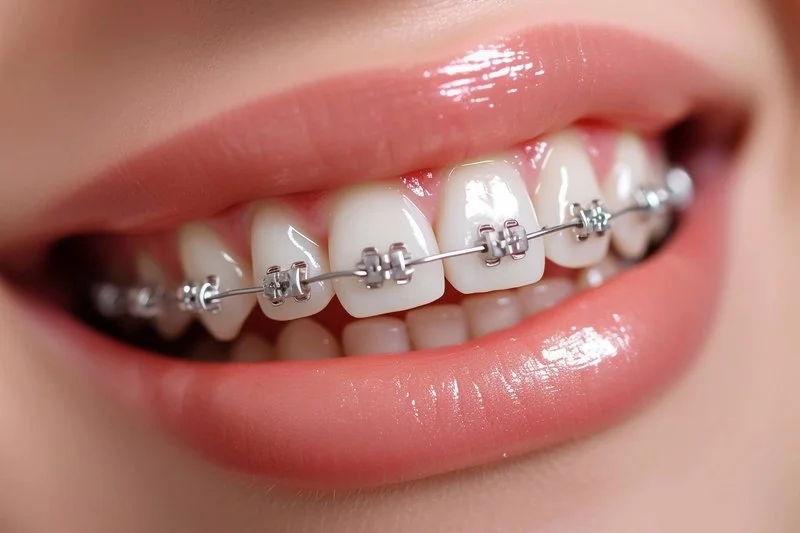
Metal braces, also known as traditional braces, are a fixed orthodontic treatment used to straighten teeth and correct certain bite problems. They remain attached to the teeth throughout treatment, so they work continuously without needing to be removed or remembered each day.
A set of traditional braces has three main parts:
Brackets: Small stainless steel pieces attached to the front of each tooth. They give the orthodontist a point from which to guide the teeth.
Archwire: A thin metal wire that runs through the brackets. It applies gentle, steady pressure to gradually move the teeth.
Elastic bands: Small bands that hold the wire in place. They are usually changed during adjustment appointments and may be available in different colours.
Since each bracket is attached to an individual tooth, the orthodontist can control how specific teeth move. This can make metal braces suitable for both straightforward alignment concerns and cases that require more detailed tooth or bite correction.
How Do Metal Braces Straighten Teeth?
Metal braces straighten teeth by applying gentle, steady pressure over time. The wire connects the brackets and guides each tooth towards its planned position. As the teeth move, the bone around them slowly changes to support their new alignment.
During regular review appointments, the orthodontist may adjust or replace the wire to keep treatment progressing. It is common to feel mild pressure or tenderness for a day or two after an adjustment, but this usually settles as your mouth gets used to the change. Teeth are moved gradually to protect the roots and surrounding tissues while allowing the new positions to remain stable.
What Conditions Can Metal Braces Fix?
Metal braces can correct many common alignment and bite problems, from mild crowding to more complex cases. Their fixed design allows the orthodontist to guide individual teeth and make gradual adjustments throughout treatment.
Crowded Teeth
Crowding happens when there is not enough space for all the teeth to sit in a straight line. Teeth may overlap or rotate, and become difficult to brush and floss properly. Metal braces can gradually create space and move each tooth into a better position.
Gaps Between Teeth
Spaces may appear naturally or develop when teeth are missing or smaller than usual. Metal braces can close selected gaps or move teeth into positions that make room for other dental treatment where needed.
Overbite
An overbite occurs when the upper front teeth cover too much of the lower front teeth. Braces can help improve how the upper and lower teeth meet, depending on the cause and severity of the problem.
Underbite
An underbite occurs when the lower front teeth sit in front of the upper front teeth. Metal braces may be used to improve tooth position, although more complex cases may require additional treatment.
Crossbite
A crossbite happens when some upper teeth sit inside the lower teeth when the mouth is closed. Braces can move the affected teeth into a more balanced position and improve the way the bite fits together.
Open Bite
An open bite means the front teeth do not touch when the back teeth are closed. Metal braces can help bring the teeth into better contact, although treatment may also involve elastics or other appliances.
Protruding Front Teeth
Front teeth that stick out may be more exposed to chips or injury. Braces can move them into a safer and more balanced position while improving the overall bite.
Metal braces are often suitable for moderate to complex alignment and bite concerns. Milder cases in Singapore may also be treated with ceramic braces or invisible dental braces, depending on your needs. An orthodontist can assess your teeth and recommend the most suitable option.
How Much Do Metal Braces Cost in Singapore?
Metal braces in Singapore generally cost around S$4,400 to S$6,000 at private dental clinics. The final amount depends on the complexity of the alignment or bite problem, the expected treatment length and what is included in the clinic’s package. Metal braces are commonly one of the more affordable fixed-braces options compared with ceramic braces and clear aligners.
What Affects the Cost of Metal Braces?
The amount you pay may be influenced by:
The difficulty of the tooth and bite correction
How long treatment is expected to take
Whether extra appliances or tooth extractions are needed
The clinic’s package inclusions
The type of retainers provided after treatment
An orthodontic assessment is needed before the clinic can provide an accurate quotation.
What Is Usually Included in the Price?
A metal braces package commonly includes the brackets and wires, regular adjustment appointments and progress reviews. Some packages may also include the removal of the braces and a basic set of retainers after treatment.
However, package inclusions vary between clinics. Ask whether the quoted fee covers the initial consultation, X-rays, digital scans, dental records, retainers and emergency visits. Extractions, replacement retainers and other dental treatment are usually charged separately.
Are Payment Plans Available?
Align Braces Clinic offers interest-free instalment plans and student pricing options to help patients spread the cost of treatment. The payment schedule and required deposit may depend on the selected package, so patients should request a full fee breakdown before starting treatment.
For a side-by-side comparison of metal braces and other orthodontic options, read our complete guide to braces costs in Singapore.
Can Metal Braces Be Claimed Under MediSave?
Metal braces cannot generally be paid for using MediSave because they are considered a non-surgical dental treatment. CPF states that orthodontic braces and other non-surgical dental services are not covered, although MediSave may be used for qualifying dental surgery performed for medical reasons. Learn more about dental treatment and MediSave from CPF.
Does CHAS Cover Metal Braces?
CHAS does not subsidise the braces treatment itself. It covers selected basic, preventive and restorative dental procedures at participating clinics, such as consultations, scaling, fillings and certain extractions, depending on the patient’s card type and eligibility.
An eligible procedure carried out before or during orthodontic treatment may therefore receive a CHAS subsidy, even though the braces remain self-funded. Patients can check the current list of covered treatments on the official CHAS dental subsidies page.
Can Baby Bonus CDA Funds Be Used for Braces?
Parents may use funds from their child’s Child Development Account for eligible dental treatment at a Baby Bonus-approved institution, subject to the scheme’s rules and the available account balance. Align Braces Clinic is accredited for the Baby Bonus scheme. Parents should confirm that their child’s planned treatment and chosen clinic outlet qualifies for the scheme before making payment.
Align Braces Clinic is also a participating institution for CHAS, Pioneer Generation, Merdeka Generation and MediSave schemes. However, accreditation does not mean metal braces are automatically subsidised or MediSave-claimable. It allows eligible patients to use the relevant scheme for separate treatments that meet the scheme’s requirements.
How Long Do You Need to Wear Metal Braces?
Most people wear metal braces for about 12 to 30 months, although the exact treatment time depends on how much the teeth and bite need to change. Simpler spacing or crowding may take around 12 to 18 months, while moderate cases often take 18 to 24 months. More complex bite problems may require 24 months or longer.
During treatment, you will usually attend adjustment appointments every four to eight weeks. These visits allow the orthodontist to check your progress and make changes to the wire when needed. Missing appointments, breaking brackets, or not following care instructions may delay treatment.
After the braces are removed, you will need to wear a retainer to help keep the teeth in their new positions. Retainer wear is an important part of treatment because teeth can gradually shift again over time.
How Do Metal Braces Compare with Other Orthodontic Options?
Metal braces are a reliable fixed treatment that can address both straightforward and more complex alignment concerns. They are usually more visible than other options, but they offer strong control over tooth movement and do not depend on the patient remembering to wear removable trays.
Ceramic braces work similarly but use tooth-coloured brackets that blend in more naturally with the teeth. They may be preferred by patients who want a less noticeable fixed option, although they can cost more and may require extra care to prevent staining around the brackets.
Invisalign uses removable clear aligners rather than brackets and wires. The aligners are less noticeable and can be taken out for meals and brushing, but they must usually be worn for 20 to 22 hours a day. They may suit many mild to moderate cases, while some complex movements are better managed with fixed braces.
Patients can also consider self-ligating braces, which use built-in clips instead of elastic bands to hold the wire. The most suitable option depends on your tooth position, bite, treatment goals, budget and preference for a fixed or removable appliance.
Benefits of Metal Braces
Metal braces remain a common choice because they are fixed, durable and suitable for a wide range of orthodontic needs. However, they also require some changes to your daily routine, especially when it comes to cleaning and food choices.
More Affordable Than Many Other Options
Metal braces are often one of the more affordable fixed orthodontic treatments. This can make them a practical choice for patients who need reliable tooth and bite correction while keeping costs manageable.
Suitable for a Wide Range of Cases
Metal braces can treat mild, moderate and complex alignment problems. They may be used for crowding, gaps, rotated teeth and different types of bite concerns.
Strong and Durable
The brackets are made from stainless steel and are designed to stay in place throughout treatment. They are less likely to chip than some less noticeable bracket materials, although they can still be damaged by hard or sticky foods.
Precise Control Over Tooth Movement
Each bracket is attached to an individual tooth, allowing the orthodontist to guide specific teeth in a planned direction. This can be useful when a case requires more detailed correction.
No Need to Remember Daily Wear
Metal braces work continuously because they remain fixed to the teeth. Unlike removable aligners, there is no need to take them out or remember to put them back in.
Choice of Coloured Bands
Patients can often choose different colours for the small elastic bands during adjustment appointments. This is especially popular with younger patients who want to personalise the appearance of their braces.
Things to Consider Before Choosing Metal Braces
They Are More Noticeable
Metal brackets and wires are visible when you smile or speak. Patients who prefer a less noticeable option may wish to ask about ceramic braces or clear aligners.
Mild Soreness Can Occur
It is common to experience pressure or tenderness for a few days after the braces are fitted or adjusted. Soft foods and suitable over-the-counter pain relief may help while the mouth adapts.
Cleaning Requires More Effort
Food and plaque can collect around the brackets and wires, so brushing and flossing may take longer. Interdental brushes, floss threaders and careful cleaning around each bracket can help reduce the risk of tooth decay and gum irritation.
Some Foods Must Be Avoided
Hard, sticky and chewy foods can loosen brackets or bend wires. Patients are usually advised to avoid items such as hard sweets, chewing gum and biting directly into very firm foods.
What to Expect During Metal Braces Treatment
Consultation and Assessment
The orthodontist checks your teeth, bite and jaw, then takes X-rays and a digital scan to plan your treatment. At Align Braces Clinic, the iTero scanner creates a 3D image without traditional moulds.
Braces Fitting
The brackets are attached to your teeth and connected with a wire. This visit takes longer than a regular review, and you may choose the colour of your elastic bands.
Regular Adjustments
You will usually return every four to eight weeks. The orthodontist checks your progress and adjusts the wire or bands to continue moving your teeth.
Braces Removal
Once treatment is complete, the brackets and wires are removed. Your teeth are then cleaned, and the orthodontist checks the final alignment and bite.
Retainer Stage
You will need to wear retainers for teeth after treatment. Retainers help hold the teeth in position and reduce the chance of them shifting again.
How to Care for Metal Braces
Brush After Meals
Use a soft toothbrush and fluoride toothpaste to clean around every bracket and along the gumline. Brushing after meals helps remove trapped food and reduce plaque buildup.
Clean Between the Teeth Daily
Use a floss threader, interdental brush or water flosser to clean under the wire and between the teeth. Daily cleaning helps protect the gums and prevent decay.
Avoid Hard and Sticky Foods
Avoid chewing gum, hard sweets, ice, nuts and very crusty foods, as they may loosen brackets or bend wires. Cut firm foods such as apples and carrots into smaller pieces.
Check for Loose Brackets or Wires
Contact the clinic if a bracket becomes loose or a wire starts poking your cheek. Orthodontic wax may provide temporary relief until the problem can be checked.
Keep Your Review Appointments
Attend every scheduled adjustment so the orthodontist can check your progress and deal with any damaged parts early. Missing appointments may slow your treatment.
Start Your Metal Braces Treatment at Align Braces Clinic
Metal braces may be suitable if you need a fixed treatment for crowded teeth, gaps or bite problems. The next step is a full assessment to understand your needs, expected treatment time and available options.
Receive Care from an Orthodontic Team
At Align Braces Clinic, metal dental braces treatment is provided by a team that includes dental specialists in orthodontics. Specialist training focuses on moving teeth and correcting bite problems, which can be particularly relevant for more complex cases.
Get a Treatment Plan for Your Needs
Your orthodontist will examine your teeth and bite before recommending an orthodontic treatment. The consultation also allows you to discuss treatment duration, costs, payment options and what to expect at each stage.
Choose a Convenient Clinic Location
Regular adjustment visits are an important part of metal braces treatment. Visit our nearby dental clinic in Orchard at Plaza Singapura or our dental clinic in Marine Parade at Parkway Parade.
Frequently Asked Questions About Metal Braces
Do metal braces hurt?
Metal braces do not usually cause constant pain, but mild pressure or tenderness is common for a few days after fitting and adjustment appointments. The brackets may also rub against the cheeks or lips while your mouth adapts. Soft foods, orthodontic wax and suitable over-the-counter pain relief can help manage temporary discomfort.
How long do metal braces take to straighten teeth?
Metal braces usually take around 12 to 30 months to straighten teeth, depending on the amount of movement and bite correction required. Mild crowding or spacing may take 12 to 18 months, while more complex cases can take two years or longer. Regular adjustment visits and avoiding broken brackets can help keep treatment on schedule.
Can adults get metal braces?
Yes, adults can get metal braces as long as their teeth and gums are healthy enough for orthodontic treatment. Braces can address crowding, gaps and bite problems at almost any age, although adults may need treatment for gum disease or tooth decay before starting. Treatment planning may also account for crowns, implants or missing teeth.
Are dental braces claimable under MediSave or CHAS in Singapore?
Metal braces are not claimable under MediSave or directly subsidised by CHAS in Singapore. CPF excludes non-surgical dental services, including orthodontic braces, from MediSave claims, while CHAS covers only selected dental procedures. Eligible treatments such as X-rays, scaling, fillings or extractions may receive CHAS subsidies separately from the braces package.
Are metal braces better than Invisalign?
Metal braces may be more suitable than Invisalign for complex tooth movements or patients who prefer a fixed treatment that does not depend on daily wear. Invisalign is removable and less noticeable but generally needs to be worn for 20 to 22 hours each day. The better choice between Invisalign and braces depends on your bite, lifestyle and treatment needs.
Can I choose the colour of my metal braces?
Yes, patients can usually choose the colour of the small elastic bands placed around traditional metal brackets. These bands are commonly replaced during adjustment visits, allowing you to select different colours throughout treatment. Colour choices do not affect how the braces work, although very pale bands may become more visibly stained between appointments.
What foods should I avoid with metal braces?
Avoid hard, sticky and chewy foods that can loosen brackets or bend the archwire, including chewing gum, hard sweets, ice and whole nuts. Firm fruit and vegetables such as apples and carrots can still be eaten when cut into small pieces. Softer foods may be more comfortable for the first few days after an adjustment.