
Could Your Child Have a Crossbite? What We Look for and Why Timing Matters
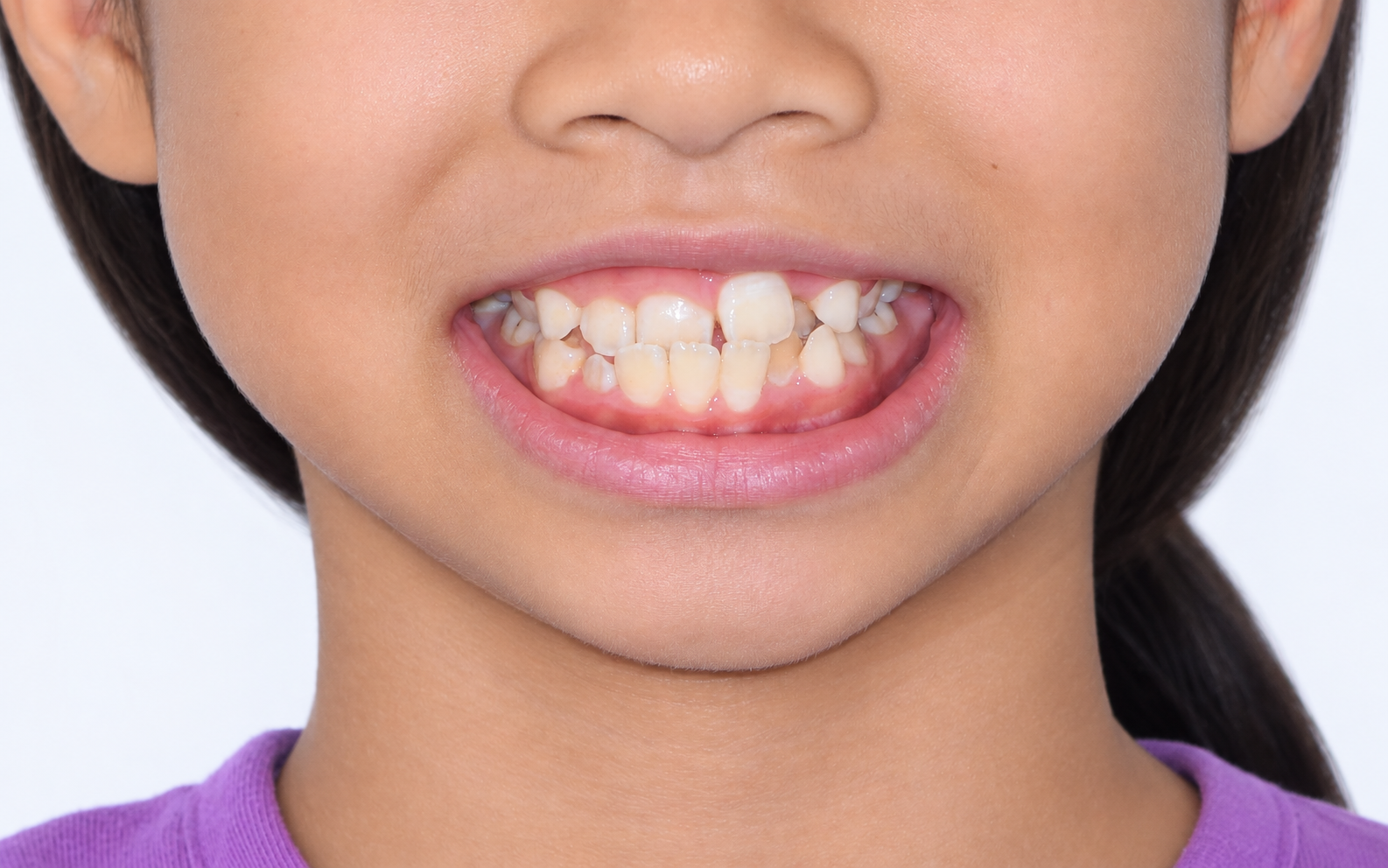
Have you noticed that your child’s teeth do not seem to fit together evenly when they bite? Perhaps their jaw slides slightly to one side as the teeth meet, or an upper front tooth appears to sit behind the lower teeth.
These can be signs of a crossbite, but appearance alone does not tell us the whole story.
At Align Braces Clinic, one of the things we look closely at is how your child closes their mouth. Does the jaw come straight down, or does it shift sideways just before the teeth meet? Is one tooth simply erupting at an unusual angle, or is the upper jaw relatively narrow?
These details help us understand whether the problem is mainly dental, skeletal, or a combination of both. From there, we can determine whether your child needs monitoring, orthodontic treatment, jaw expansion, or another approach.
Key Takeaways
A crossbite is a type of bite misalignment that occurs when one or more upper teeth sit behind or inside the lower teeth.
The issue may involve a single tooth, several teeth, or a wider difference in how the upper and lower jaws relate.
At Align Braces Clinic, we assess not just tooth position, but also jaw movement, growth stage, bite function, and whether the problem is dental or skeletal.
Some mild cases of crossbites may only need monitoring, while others may benefit from braces, clear aligners, palatal expansion, or other growth-guidance appliances.
Timing matters because certain jaw-related problems may respond better to treatment while your child is still growing.
An orthodontic assessment from around age seven can help identify developing bite issues early and determine whether treatment is needed now, later, or not at all.
What is a Crossbite?
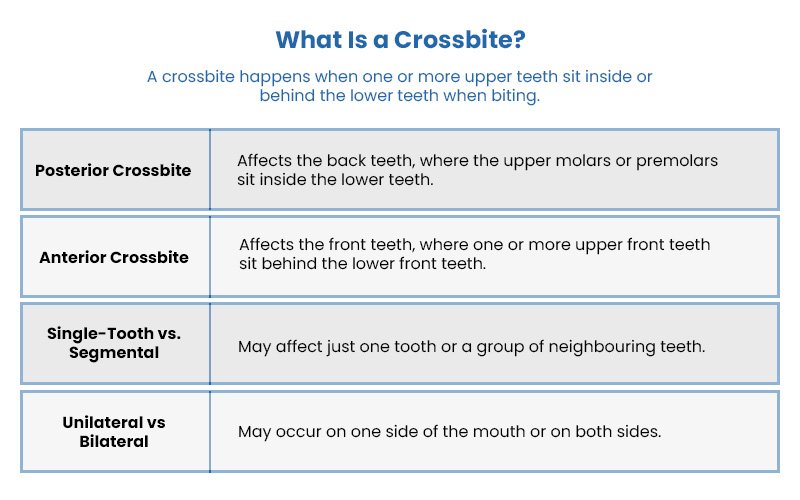
A crossbite is a type of bite misalignment where certain upper teeth sit behind the lower teeth when the mouth is closed. It can affect the front teeth, back teeth, or both, and may involve a single tooth or larger sections of the bite.
1. Posterior Crossbite
A posterior crossbite affects the premolars and molars. Instead of the upper back teeth sitting slightly outside the lower teeth, they sit inside them. This commonly occurs when the upper dental arch or jaw is relatively narrow compared with the lower jaw. In some children, the lower jaw shifts sideways as they bite down to find a more comfortable position.
2. Anterior Crossbite
An anterior crossbite affects the front of the mouth, where one or more upper front teeth sit behind the lower front teeth. Parents often first notice this as the permanent incisors begin to erupt.
3. Single-Tooth vs. Segmental
A single-tooth crossbite involves one tooth, often because it has erupted out of position or there isn't enough room for it to emerge normally. On the other hand, the segmental variation involves several neighbouring teeth.
4. Bilateral vs. Unilateral
A unilateral crossbite affects only one side of the mouth and may be associated with a slight shift in the lower jaw when biting. A bilateral crossbite occurs on both sides and more often reflects a width difference between the upper and lower jaws.
Common Causes of Crossbite in Children
There is rarely one universal cause. When we assess a child, we consider jaw development, tooth eruption, available space, oral habits, and function together.
1. Genetics and Heredity
Many crossbites have a skeletal component influenced by inherited jaw size and growth patterns. For example, if the upper jaw (maxilla) develops more slowly or remains relatively narrower or further back than the lower jaw (mandible), a bite imbalance may develop.
2. Delayed Loss of Baby Teeth or Dental Crowding
Baby teeth help guide permanent teeth into position. If a baby tooth remains in place for longer than expected, it may affect the eruption path of the permanent tooth beneath it, causing it to emerge out of its usual position in some children.
Dental crowding can contribute in a similar way. Where there is limited space in the mouth, an erupting tooth may be displaced from its expected position.
3. Childhood Oral Habits
Prolonged use of a pacifier or thumb-sucking creates a constant suction that exerts inward pressure on the upper back teeth. Over time, this can narrow the upper arch and increase the likelihood of developing a posterior crossbite.
4. Mouth Breathing
Chronic mouth breathing, which may be linked to allergies, nasal obstruction, or enlarged tonsils, can influence tongue posture and oral function. In some children, this may contribute to a narrower upper arch and increase the likelihood of developing a bite misalignment.
If your child has ongoing breathing difficulties or suspected nasal obstruction or enlarged tonsils, we may also recommend assessment by an ENT specialist.
What Happens if You Leave a Crossbite Untreated?
Not every crossbite causes immediate problems, especially when the imbalance is mild. However, depending on the type and severity, leaving it untreated may contribute to:
Uneven jaw development: If your child’s jaw consistently shifts to one side when biting, this may affect how the jaws develop and contribute to facial asymmetry over time.
Tooth wear or damage: Uneven contact can place extra pressure on certain teeth, increasing the risk of enamel wear, chipping, cracks, or sensitivity over time.
Gum recession: Teeth that meet at unfavourable angles may experience repeated stress, which can contribute to localised gum recession and changes in the supporting bone.
Jaw discomfort: A functional shift may place additional strain on the jaw joints and surrounding muscles, which can cause clicking, tightness, or discomfort.
What We Look for When Assessing Your Child’s Bite
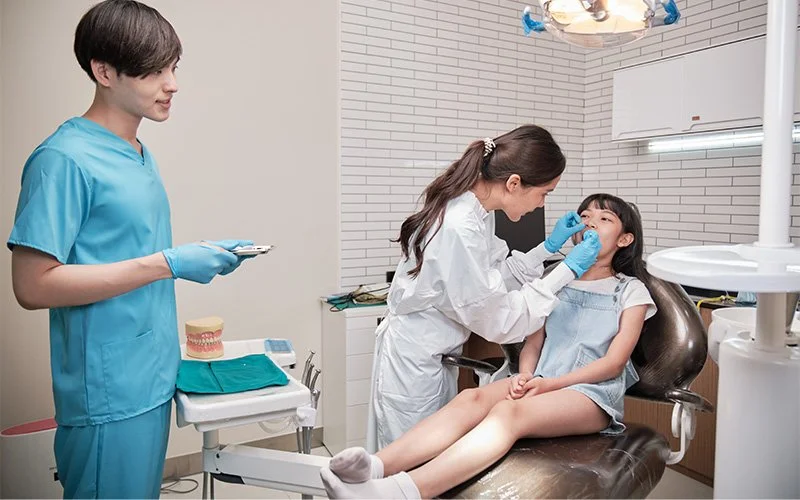
At Align Braces Clinic, we assess how your child’s teeth and jaws fit together, how the bite functions, and how these relationships are changing with growth. Where appropriate, we may use digital records, including 3D intraoral scans with an iTero scanner, to support the assessment and treatment planning.
1. Whether the Bite Is Dental or Skeletal
Our orthodontists first assess whether the discrepancy is mainly caused by the position of individual teeth, the relationship between the upper and lower jaws, or a combination of both. This helps us understand what is driving the bite pattern and which treatment approaches may be suitable.
2. Whether the Jaw Shifts as Your Child Bites Down
We watch how the lower jaw moves as your child closes their mouth. In some cases, it begins in a centred position before moving slightly to one side or forward so the teeth can fit together more comfortably. This functional shift can provide useful information about how the bite is affecting jaw position.
3. How Many Teeth and Which Areas Are Affected
We check whether the issue involves a single tooth, several neighbouring teeth, the front or back of the mouth, or one or both sides. The extent of the affected area helps us determine whether the problem is localised or part of a broader bite discrepancy.
4. Whether Growth Is Influencing the Bite
Your child’s age and stage of jaw development are also important. We consider how much growth remains, how the permanent teeth are erupting, and whether the bite is likely to change as the jaws continue developing. This helps us decide whether monitoring or earlier intervention may be appropriate.
5. Whether the Bite Is Affecting Function or Tooth Health
Finally, we assess how the bite is functioning day to day. This includes checking for uneven tooth contact, signs of wear, gum changes, chewing difficulties, jaw discomfort, or repeated cheek or tongue biting. These findings help us understand whether the bite is already affecting comfort or oral function.
Treatment Options We May Recommend for a Crossbite
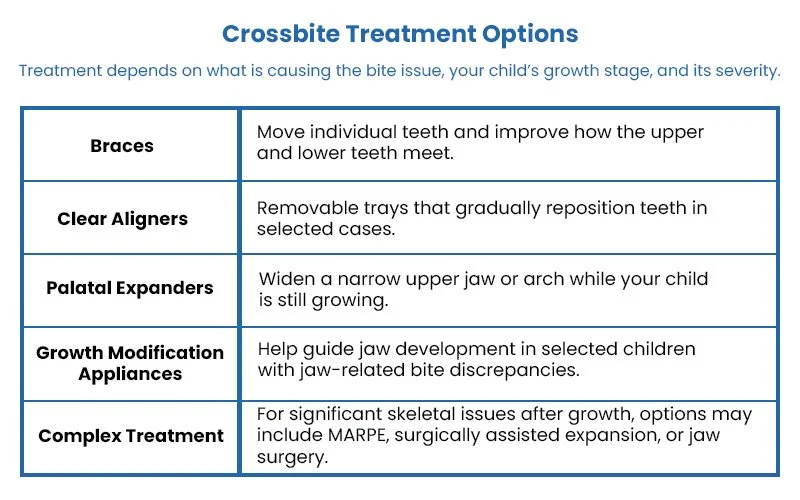
Treatment depends on what is causing the crossbite, how severe it is, and how much jaw growth remains. Some cases can be managed by moving the teeth, while others may require expansion or growth-guidance appliances
1. Orthodontic Appliances
If the issue is mainly related to tooth position, we may use braces or clear aligners to guide the teeth and improve how the upper and lower arches fit together.
Fixed Braces
Braces use brackets and archwires to gradually move the teeth into new positions. Depending on the case, they may help correct crowding, rotated teeth, or teeth that sit too far inside or outside the dental arch.
Options include:
Traditional Metal Braces: Metal brackets attached to the teeth that provide reliable tooth movement for a wide range of bite corrections.
Ceramic Braces: Similar to metal braces, but made with tooth-coloured or clear brackets for a less noticeable appearance.
Self-Ligating Braces: Braces that use clips instead of elastic ties to hold the archwire in place, allowing for smoother wire movement during treatment.
Clear Aligners
Clear aligners use a series of custom-made removable trays to gradually reposition the teeth. In selected cases, tooth-coloured attachments may be added to help guide more specific movements.
They are less noticeable than fixed braces and can be removed for eating and cleaning, but they need to be worn consistently for treatment to progress as planned.
2. Palatal Expanders and Growth Modification Appliances
If the upper jaw is too narrow, treatment during childhood or adolescence may focus on widening the arch while growth is still ongoing. The appliance used will depend on the degree of narrowing and the type of bite discrepancy.
Removable Palatal Expanders: These appliances are generally used for mild upper jaw narrowing. Conventional versions use an adjustable expansion screw, while newer options include the Invisalign Palatal Expander, which uses a series of customised 3D-printed appliances that gradually widen the upper jaw in selected growing patients.
Rapid Palatal Expanders (RPE): Unlike removable expanders, RPEs are fixed appliances cemented onto the upper teeth and cannot be removed by the patient. They apply stronger, continuous forces to widen the upper jaw and are typically recommended for children with moderate to severe upper jaw narrowing or skeletal posterior crossbites.
Quad Helix Appliances: Fixed, spring-like appliances that apply slower, more targeted expansion in selected cases, such as milder crossbites.
Reverse-Pull Headgear (Facemask Therapy): We may consider this for children with anterior crossbites or underbite tendencies to encourage forward growth of the upper jaw.
When More Complex Treatment May Be Needed
In adults, the jaw bones are fully developed and less responsive to conventional growth modification. When the crossbite is caused by significant skeletal differences, your orthodontist may recommend a more complex approach.
1. Miniscrew-Assisted Expansion (MARPE)
Miniscrew-assisted rapid palatal expansion (MARPE) using the Maxillary Skeletal Expander (MSE) uses small temporary screws placed in the palate to apply expansion forces more directly to the jawbone rather than mainly through the teeth. In selected young adult patients, this approach may allow skeletal expansion without more extensive jaw surgery.
2. Surgically Assisted Palatal Expansion (SARPE)
In adults with a severely narrow upper jaw, the upper jaw bones may no longer separate predictably with traditional expansion alone. Surgically assisted rapid palatal expansion (SARPE) combines orthodontics with minor jaw surgery to help widen the upper jaw safely. After the surgical procedure loosens the fused areas of the jaw, an expansion appliance is used to gradually widen the upper arch during healing.
3. Orthognathic (Jaw) Surgery
For severe skeletal crossbites involving major jaw discrepancies, orthodontic treatment may sometimes be combined with orthognathic surgery. In these cases, braces or aligners align the teeth before surgery, while the procedure repositions the jaws to improve overall bite balance and jaw relationships. This approach is typically reserved for more significant skeletal imbalances.
Frequently Asked Questions
1. Can a crossbite correct itself naturally?
Some very mild cases may change as your child grows and their permanent teeth erupt, but many crossbites do not resolve fully on their own, especially when jaw development or an established bite discrepancy is involved.
2. At what age should children be assessed for crossbites?
We recommend bringing your child in for an orthodontic assessment from around age seven, even if not all of their adult teeth have erupted yet. At this stage, the jaws are still developing, which makes it easier to identify growth-related bite issues.
Early assessment does not always mean immediate treatment is necessary, but it can help determine whether monitoring or growth-guided intervention may be beneficial while your child is still growing.
3. Will my teeth shift again after treatment?
Teeth can gradually shift over time, even after orthodontic treatment. Changes in biting forces, growth, and the surrounding tissues may gradually affect tooth position. To help maintain the corrected alignment, your child will usually be advised to wear a retainer after treatment according to the orthodontist’s instructions.
Conclusion
A crossbite does not always require immediate treatment, but identifying it early can give you a clearer picture of how your child’s teeth and jaws are developing. In some cases, monitoring is appropriate. In others, treatment during growth may help address the bite before the jaws become less responsive to certain types of correction.
At Align Braces Clinic, we provide orthodontic care for children in a clinic environment designed with younger patients in mind. Depending on your child’s needs, treatment options may include braces or Invisalign, with package options available for students. Our orthodontic team will first assess the cause and severity of the bite issue before discussing the suitable approach and timing with you.
Contact us today to learn more.